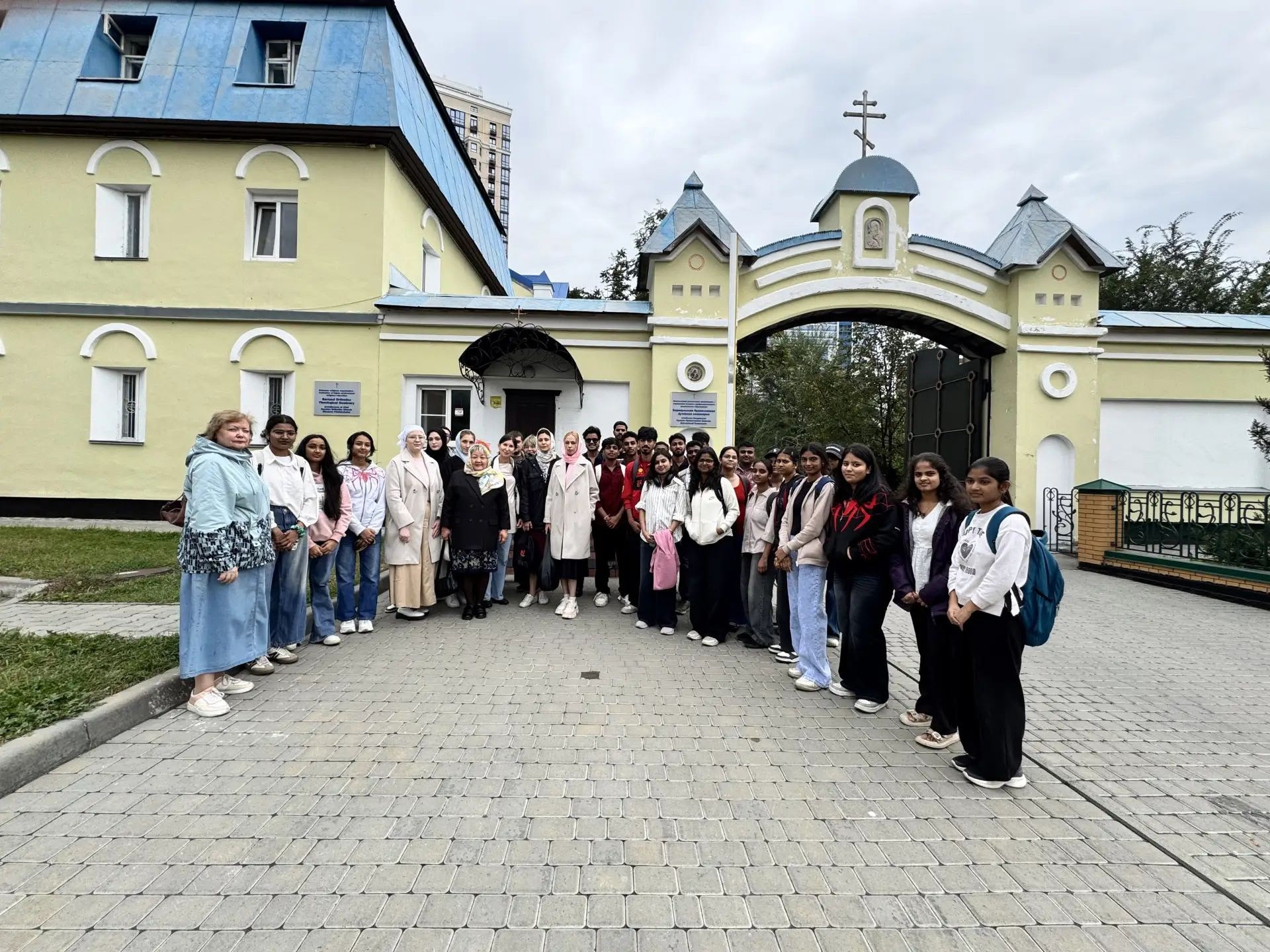
Студенты межнационального клуба CORE АГМУ — представители Дагестана, Казахстана, Таджикистана, малочисленных народов России и граждане РФ — вместе со студентами ФИС из Индии побывали в Барнаульской духовной семинарии.
Экскурсию провёл иерей Иоанн Ефимец — преподаватель, помощник проректора по научной работе семинарии и руководитель молодёжного объединения «Кинония». Он рассказал ребятам, как устроено обучение и кто может поступить: главное условие — православное вероисповедание.
Немного истории: семинария ведёт отсчёт с 1869 года — тогда она была духовным училищем. После революции её закрыли, а в 1997 году возродили; спустя почти десять лет учреждение стало духовной семинарией.
Здесь готовят не только служителей церкви: среди выпускников — теологи, сотрудники религиозных организаций, руководители хоров, псаломщики. Обучение охватывает огромный пласт христианской культуры: историю, философию, искусство, архитектуру, лингвистику и многое другое.
Интересный факт: семинаристы находятся на полном обеспечении церкви — им бесплатно предоставляют образование, проживание в общежитии, питание и другое.
Благодарим за организацию экскурсии деканат ФИС, кафедру РКИ и куратора клуба CORE — благодаря вам студенты смогли открыть для себя ещё одну грань нашего города!
«The City Where I Study» Tour: A Visit to the Barnaul Theological Seminary
Students from the ASMU «CORE» interethnic club—representing Dagestan, Kazakhstan, Tajikistan, Russia’s indigenous minority peoples, and other regions of the Russian Federation—joined students from the Faculty of International Students (FIS) from India for a visit to the Barnaul Theological Seminary.
The tour was led by Priest Ioann Yefimets, a lecturer, assistant to the vice-rector for academic research, and head of the «Koinonia» youth group. He explained the structure of the educational program and admission requirements, noting that the primary condition for enrollment is adherence to the Orthodox faith.
A bit of history: the seminary traces its origins back to 1869, when it began as a theological school. It was closed after the Revolution but re-established in 1997; nearly a decade later, the institution was granted the status of a theological seminary.
The seminary trains more than just clergy; graduates include theologians, staff members for religious organizations, choir directors, and psalm readers. The curriculum covers a vast spectrum of Christian culture, including history, philosophy, art, architecture, linguistics, and much more.
An interesting fact: seminarians are fully supported by the Church, receiving free education, dormitory accommodation, meals, and other necessities.
We extend our thanks to the FIS Dean’s Office, the Department of Russian as a Foreign Language, and the CORE club coordinator for organizing this tour—thanks to you, the students were able to discover yet another facet of our city!